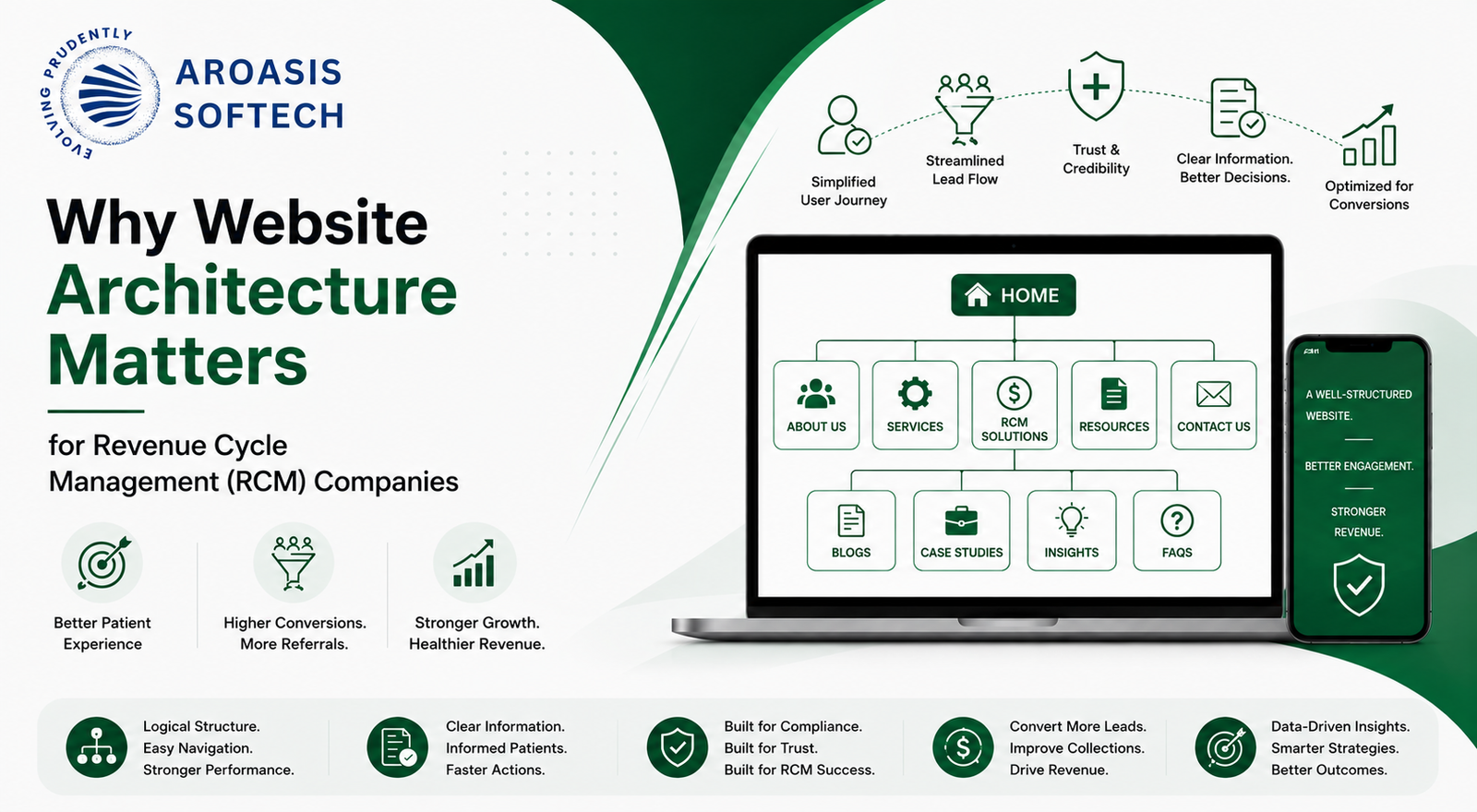
Why Website Architecture Matters for Revenue Cycle Management (RCM) Companies
Revenue Cycle Management companies sell trust before they sell anything else. A hospital system or physician group evaluating an RCM or medical billing partner is making a decision that affects their cash flow, compliance exposure, and patient relationships — and in most cases, the first place they evaluate that trust is your website.
Yet a large share of RCM and healthcare revenue management websites are built the same way any small business website is built: a homepage, an about page, a services list, a contact form. That structure works for a local bakery. It does not work for a company asking a hospital administrator to hand over their billing and claims process.
What "Website Architecture" Actually Means Here
Architecture isn't about how the site looks — it's about how information is organized, how a visitor moves through it, and what each page is built to prove. For an RCM company, that means the site needs to answer very specific questions a prospective client is silently asking:
- Do they understand our specific type of practice? A hospital system, a multi-specialty group, and a single physician practice all have different RCM needs. A single generic "services" page can't speak to all three convincingly.
- Are they compliant and secure? HIPAA and data-handling language shouldn't be a footnote — it needs its own clear, findable section.
- Do they have real experience, not just claims? Vague statements like "trusted by healthcare providers" carry no weight without specifics — case studies, denial-rate improvements, collection-cycle results.
- How do their systems actually work with ours? RCM buyers want to understand integration with existing EHR/EMR systems before they'll even take a sales call.
A flat, template-based site structure has no room to answer any of this. It just displays information. Good architecture is built to persuade, sequenced the way a skeptical buyer actually thinks through a decision.
The Structural Elements That Matter Most
For an RCM or medical billing company's website, a handful of structural choices make an outsized difference:
- Service pages segmented by specialty or practice size — not one generic "our services" page. Hospital RCM, physician group billing, and specialty practice billing are different buying conversations.
- A dedicated compliance and security page — HIPAA compliance, data handling, audit practices — placed where a visitor can find it without digging.
- Case studies with real, specific outcomes — collection rate improvements, denial reduction percentages, turnaround time — not generic testimonials.
- Clear integration information — which EHR/EMR/practice management systems the RCM process connects with.
- A structured, fast-loading site — healthcare buyers are often evaluating multiple vendors in one sitting; a slow or confusing site gets closed before it gets read.
None of this is decorative. Each element removes a specific piece of hesitation a healthcare buyer has before picking up the phone.
What This Looked Like in Practice
We recently rebuilt the website for a healthcare revenue management and consulting client. The existing site was functional but generic — it didn't communicate the depth of their expertise or make it easy for prospective healthcare clients to see themselves in the content. The rebuild focused on restructuring the site around clear service segmentation, industry-specific messaging, and a more content-driven presentation of their expertise — the goal being brand credibility and stronger engagement from the healthcare organizations evaluating them, not just a visual refresh.
That's the difference between a website redesign and a website architecture fix: one changes how it looks, the other changes how effectively it does the job of converting a skeptical, compliance-conscious buyer. You can see the full breakdown in our case study.
If You're Evaluating Your Own RCM Website
A quick gut check: if a hospital administrator or practice manager landed on your homepage right now, could they tell within 30 seconds whether you serve organizations like theirs, whether you're compliant, and whether you have proof it works? If the honest answer is no, the problem usually isn't your content — it's your structure.
At Aroasis Softech, we build websites and software for businesses across regulated and complex industries, including healthcare revenue management, where the site has to do real persuasive and compliance-communication work — not just look presentable. If your RCM or healthcare business's website isn't pulling its weight, get in touch and we'll walk through what's actually holding it back.